
Bradshaw Gates • Fence & Gate Advice
November 8Custom Driveway Gate Fabrication: Costs, Styles and Choices
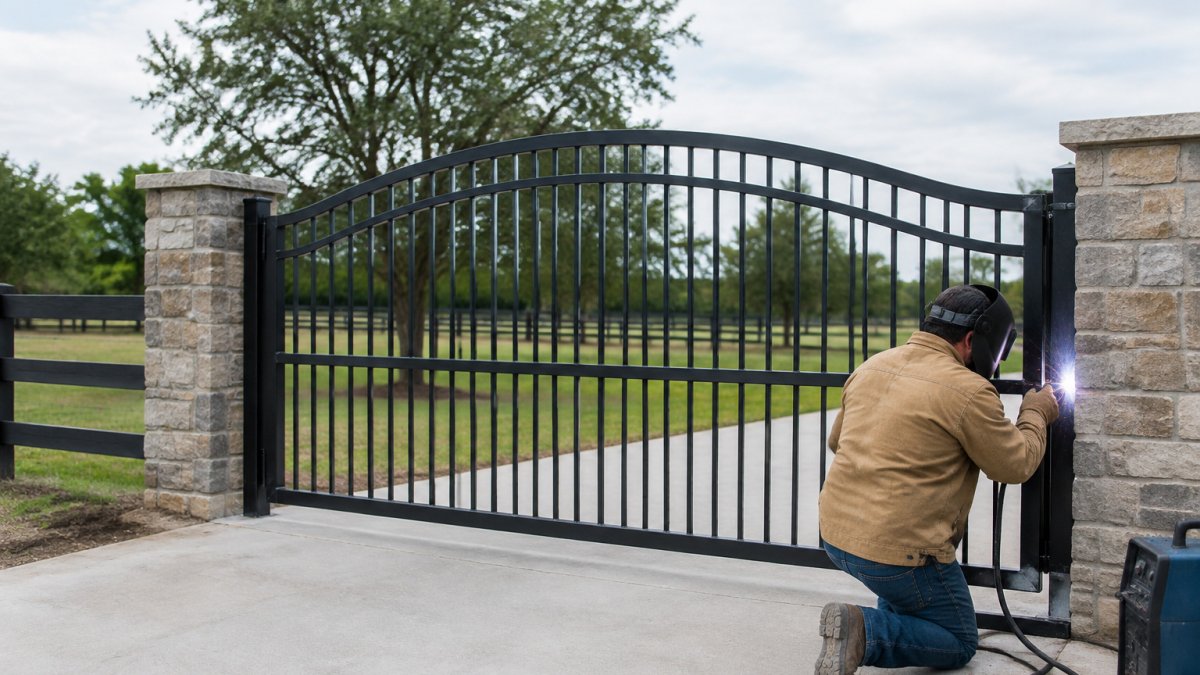
Quick Summary
Driveway gate fabrication is the process of designing, welding, finishing and installing a custom gate to fit a specific opening. It runs in sequence: site measurement, design approval, fabrication, finishing, installation, then automation and safety testing. Costs depend on gate type, size, material, automation and site conditions, so a site-specific quote is the most accurate way to budget.
- Measure the opening at the top, middle and bottom, plus the driveway grade, before any steel is cut.
- Approve a shop drawing showing frame layout and hinge or latch locations before fabrication begins.
- Sliding gates suit sloped or tight driveways, while swing gates need open arc clearance.
- Get quotes itemized by gate, hardware, finish, installation, electrical work and permits.
- Call 811 before digging footings to locate buried utilities in the driveway area.
Table of Contents
- How Custom Driveway Gate Fabrication Works, Step by Step
- Step 1: Site Measurement and Preparation
- Step 2: Design and Drawing Approval
- Step 3: Fabrication
- Step 4: Finishing
- Step 5: Installation and Hanging
- Step 6: Automation, Safety Testing and Final Check
- Sliding Gate vs Swing Gate for Driveway Use
- Custom Metal Gates for Driveways: Materials, Finishes and Automation
- Custom Driveway Gate Fabrication Services Cost and Driveway Gate Installation Cost
- The Main Cost Drivers
- How to Compare Quotes
- Budgeting Without a Published Price List
- Booking Your Custom Gate Consultation with Bradshaw Gates
- Frequently Asked Questions
How Custom Driveway Gate Fabrication Works, Step by Step
Custom driveway gates are built in a clear sequence. Each stage affects the next, so skipping ahead usually creates problems at installation. The steps below show what to expect, from the first measurement to the final hanging, with the specifics that determine whether the finished gate swings cleanly for years or binds within a season.
Step 1: Site Measurement and Preparation
Accurate measurement comes first. A gate that is off by even a few inches can bind, sag or fail to close, so fabricators typically record the opening width at the top, middle and bottom of the posts, the grade of the driveway across the opening, and the clearance on both sides before cutting any steel.
Site preparation usually involves checking the posts. Solid posts set in properly prepared footings keep the gate aligned over time.
Watch out: measuring only the opening width and ignoring the grade is the most common cause of a gate that drags or will not latch.
Step 2: Design and Drawing Approval
Design comes next. The fabricator confirms the style, height, privacy level and any decorative elements, then sets the gate type and hardware. This is also when the opening direction, hinge side and latch side are fixed, along with the clearance needed for the swing arc or the slide run. A drawing or shop sketch should show the frame layout, picket or panel spacing, and the location of hinges, latches and any operator mounting points.
Step 3: Fabrication
The frame is typically squared and braced first, then the infill, pickets, panels, rings or scrollwork, is added. Hinge and latch reinforcement plates are welded in at this stage, because adding them after finishing means grinding and repainting. Fabricators check the frame for square by measuring diagonally corner to corner; equal diagonals mean the frame is true. After welding, the gate is cleaned and prepped for finish.
Step 4: Finishing
Finish matters as much as the base metal. A powder coat or paint system protects against corrosion and keeps the gate looking consistent over years of weather exposure. Ask about the finish process and what maintenance it requires, and confirm that hinge and latch hardware is either finished with the gate or installed after coating so the coating is not damaged during assembly.
Step 5: Installation and Hanging
Installation follows fabrication. The gate is hung, leveled and tested through its full range of motion. For a swing gate, that means setting the hinge height so the gate clears the ground across its arc and checking that it latches without lifting. For a sliding gate, the track is set level and the gate is adjusted so it rolls without binding and stops squarely at the catch.
Step 6: Automation, Safety Testing and Final Check
If an automatic opener is part of the plan, the operator, safety sensors and keypad or remote access are wired and tested at this stage. The operator is mounted so the gate moves through its full travel without straining, and the safety sensors are aligned and tested by interrupting the beam while the gate is moving. A final check confirms the gate closes squarely and latches securely, the manual release works, and the operator reverses or stops as designed when the sensors are triggered.
Sliding Gate vs Swing Gate for Driveway Use
Sliding and swing gates each suit different properties.
Homeowner and expert discussing driveway gate fabrication during a site inspection of a sliding gate path.Sliding gates work well on sloped or uneven driveways and where space in front of the gate is limited. They do require a level track and a clear run on one side.
Many homeowners choose based on the lot. If the driveway runs close to the house or a tight corner, a sliding gate usually fits better.
Custom Metal Gates for Driveways: Materials, Finishes and Automation
Steel is a common material for custom driveway gates because it handles weight, weather and repeated use, and it can be welded into detailed patterns.
Finish matters as much as the base metal. Automation adds convenience and security. A gate operator can be paired with remote controls, keypads or access systems. Safety sensors are important, because they stop the gate if something is in its path.
Custom Driveway Gate Fabrication Services Cost and Driveway Gate Installation Cost
Costs vary with gate size, material, design complexity, automation and site conditions, and pricing depends on the specifics of each project. Instead of guessing at a single number, it helps to understand how each driver moves the total, so you can compare quotes on equal terms and see where a budget is really going.
The Main Cost Drivers
- Gate type and configuration: sliding and swing gates are priced differently, and double gates involve more hardware and fabrication than single gates, depending on the design.
- Opening size and weight: wider and taller gates use more material and heavier frames, and weight drives hinge, track and operator sizing. A gate built for a wide driveway entrance costs more than one built for a walk-gate-sized opening, and the hardware has to be rated for the load.
- Material and finish: the material chosen and the finish selected affect the total, and decorative work adds labor. Custom panels and decorative elements increase fabrication time.
- Automation and access controls: operators, keypads, sensors and remote access add to the total, and the operator must be sized to the gate's weight and length. Safety sensors and a manual release are part of a complete automated system, not optional extras.
- Site conditions: slopes, footings, trenching and electrical work affect installation. A sloped driveway may need extra post depth or a level track run; a gate located far from the house may need trenching for power and controls; rocky ground or buried utilities can slow footing work.
- Permits and inspections: some jurisdictions require a permit for a gate, especially an automated one near a property line or in a setback, and inspection fees add to the project cost. Ask the fabricator whether permits are included in the quote or billed separately.
How to Compare Quotes
A useful quote itemizes the gate itself, the hardware, the finish, the installation labor, any electrical or trenching work, and permits. A single lump-sum number makes it harder to see where the total is going. Ask each bidder to state the gate weight, the operator model and its rated capacity, and the finish system, so the quotes can be compared line by line.
Budgeting Without a Published Price List
Because the total depends on so many variables, the most accurate way to get a number is a site-specific quote. Contact Bradshaw Gates on the website with your measurements, property layout and design preferences to receive current pricing for your project. Bringing photos of your entrance, a rough sketch of your property and any survey or plat you have helps the team give you a clearer estimate and flag site conditions that could affect the price before fabrication begins.
The main cost drivers and how they affect the total are summarised below.
| Cost driver | Effect on price | Note |
|---|---|---|
| Gate type and configuration | Sliding and swing gates priced differently | Double gates involve more hardware and fabrication |
| Opening size and weight | Wider, taller gates cost more | Hardware must be rated for the load |
| Material and finish | Affects total and fabrication time | Decorative work adds labor |
| Automation and access controls | Adds operators, keypads, sensors, remote access | Operator must be sized to gate weight and length |
| Site conditions | Slopes, footings, trenching and electrical work add cost | Rocky ground or buried utilities slow footing work |
| Permits and inspections | Adds permit and inspection fees | Ask whether permits are included in the quote |
Booking Your Custom Gate Consultation with Bradshaw Gates
A consultation is the fastest way to move from ideas to a finished gate. A consultation can review your site, discuss style and security needs, and explain how the fabrication and installation process would work for your property.
To get started, request a custom gate quote from Bradshaw Gates and share your opening width, preferred gate type and any automation needs.
Frequently Asked Questions
How much does it cost to build a driveway gate?
Pricing for a custom driveway gate depends on gate width, height, material, design detail, whether automation is included, and site conditions such as slope and terrain. Simple pedestrian gates generally cost less than full driveway gates, and automated systems add to the total. Bradshaw Gates does not publish fixed prices because every project is built to the property. Request a quote through the Bradshaw Gates website for current pricing based on your specific requirements.
Do I need a permit to add a driveway gate?
Permit requirements vary by city, county and homeowners association, and they can apply to gate height, setbacks from the street, and electrical work for automated openers. Check with your local building or planning department before fabrication begins. Confirm property-line boundaries as well, since a gate placed on a neighbor's land or within a public right-of-way can create legal problems later. A professional fabricator can help you identify the questions to ask before ordering.
What should I ask a driveway gate fabricator before hiring them?
Ask how the gate is measured on site, which materials and finishes are included, whether automation and safety sensors are part of the quote, and who handles installation. Request details on post foundations, since solid posts and careful alignment affect long-term durability. Also ask about quality control on each component, how repairs are handled, and whether a written quote is provided after a design consultation.
What materials are best for a custom driveway gate?
Steel and iron are common choices for custom driveway gates because they support heavy frames and allow ornamental detail. The right choice depends on the gate size, the look you want, exposure to weather, and how much upkeep you are willing to do.
Add bradshawgates.com as a preferred source on Google →Frequently Asked Questions
How much does it cost to build a driveway gate?
Pricing for a custom driveway gate depends on gate width, height, material, design detail, whether automation is included, and site conditions such as slope and terrain. Simple pedestrian gates generally cost less than full driveway gates, and automated systems add to the total. Bradshaw Gates does not publish fixed prices because every project is built to the property. Request a quote through the Bradshaw Gates website for current pricing based on your specific requirements.
Do I need a permit to add a driveway gate?
Permit requirements vary by city, county and homeowners association, and they can apply to gate height, setbacks from the street, and electrical work for automated openers. Check with your local building or planning department before fabrication begins. Confirm property-line boundaries as well, since a gate placed on a neighbor's land or within a public right-of-way can create legal problems later. A professional fabricator can help you identify the questions to ask before ordering.
What should I ask a driveway gate fabricator before hiring them?
Ask how the gate is measured on site, which materials and finishes are included, whether automation and safety sensors are part of the quote, and who handles installation. Request details on post foundations, since solid posts and careful alignment affect long-term durability. Also ask about quality control on each component, how repairs are handled, and whether a written quote is provided after a design consultation.
What materials are best for a custom driveway gate?
Steel and iron are common choices for custom driveway gates because they support heavy frames and allow ornamental detail. The right choice depends on the gate size, the look you want, exposure to weather, and how much upkeep you are willing to do.
Planning a fence or gate project?
Bradshaw Gates serves Northeast Oklahoma and the Four-State area.
Request a Quote Call 918-325-0057