Bradshaw Gates • Fence & Gate Advice
November 1What Is the Most Durable Fencing for a Rural Property?
Last Updated: November 10, 2026
Quick Summary
The most durable fencing for a rural property matches the material to your livestock and terrain, sets posts deep enough to hold under load, and uses rust-resistant hardware. Wire gauge, galvanized coating, and post depth matter more than brand names, and skipping corner bracing is the most common reason a new fence line goes slack within two seasons.
- Woven wire stops sheep, goats, and poultry, while high-tensile wire suits long boundary runs.
- Fixed-knot wire is a strong, long-lasting option for cattle.
- Closer post spacing means more support and less sag in durable fencing.
- High-tensile wire needs proper bracing at every corner to stay tight.
- On steep sections or odd angles, custom fabrication can beat standard panels.
Table of Contents
- What Makes Livestock Fencing Durable on Rural Properties
- Woven Wire vs. High-Tensile Fence: Which Holds Up Better
- Livestock Fence Post Spacing and Structural Support
- Frequently Asked Questions
What Makes Livestock Fencing Durable on Rural Properties
Durable fencing for livestock on rural properties comes down to three things: the right material for your animals and terrain, posts set deep enough to hold under load, and rust-resistant hardware.
Smarter Fencing for Small Farms: Save Steel, Save Money
Farm Learning with Tim Thompson
Wire gauge, galvanized coating, and post depth matter more than brand names. Skipping corner bracing is the most common reason a new fence line goes slack within two seasons.
Woven Wire vs. High-Tensile Fence: Which Holds Up Better
Woven wire and high-tensile fence serve different jobs, and picking between them depends on your livestock and your ground. Woven wire delivers a physical barrier that stops sheep, goats, and poultry, while high-tensile wire suits long boundary runs where tension and cost control matter most. For cattle, Bekaert's cattle fencing guidance points to fixed-knot wire as a strong, long-lasting option.
Neither material is universally better. Woven wire holds small animals but deforms if a horse runs into it; high-tensile wire stays tight across long spans but needs proper bracing at every corner. Choosing on price alone, while ignoring how the fence behaves under animal pressure, is a common mistake.
The two main wire options suit different livestock and ground, so match the material to the job.
| Option | Best for | Key difference |
|---|---|---|
| Woven wire | Sheep, goats, and poultry | Physical barrier that stops small animals |
| High-tensile wire | Long boundary runs | Stays tight across long spans; needs corner bracing |
| Fixed-knot wire | Cattle | Strong, long-lasting option |
Livestock Fence Post Spacing and Structural Support
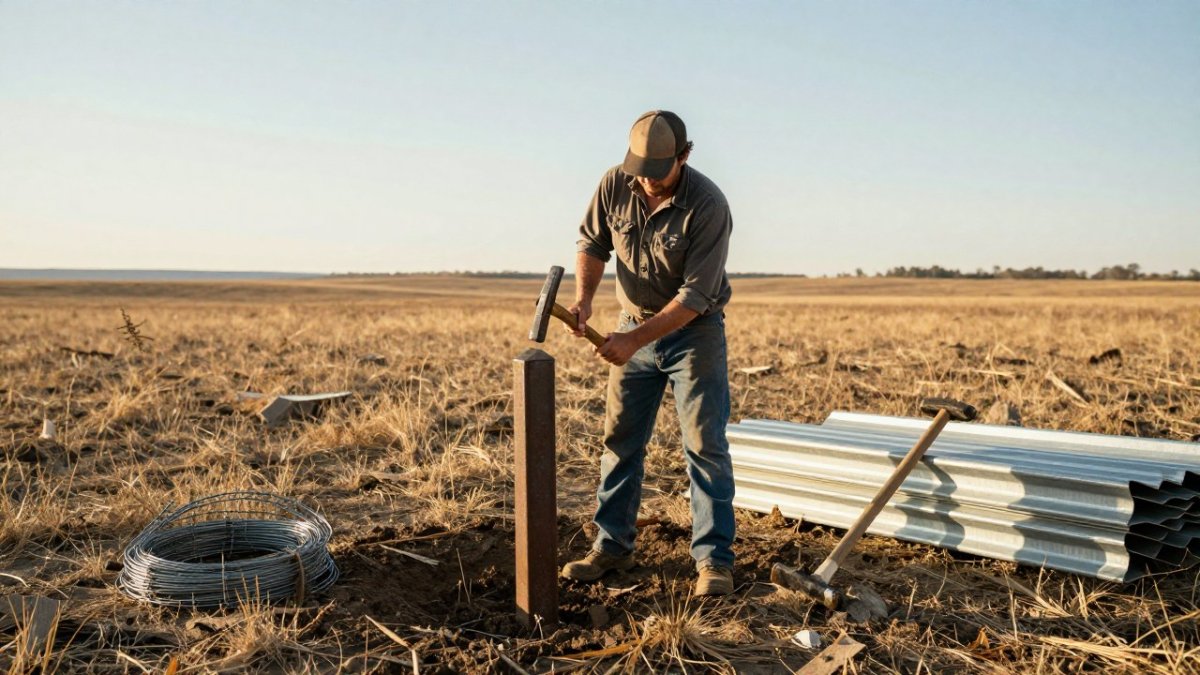
Post spacing is one of the biggest factors in how long your durable fencing lasts. Closer posts mean more support and less sag, while wider spacing saves material but demands stronger wire and better bracing. On uneven rural ground, post depth and alignment decide whether the whole system holds.
Steel pipe corner posts supporting durable fencing along a rural pasture with uneven terrainFor sloped ground, our guide on how to build a fence on sloped terrain covers measuring grade, stepping or racking panels, and closing bottom gaps. On steep sections or odd angles, custom fabrication can suit the job better than standard panels.
Every rural property has at least one stretch of ground that standard fencing plans ignore. We build for that stretch, with custom steel pipe fencing, piece-by-piece quality control, and gate opener diagnostics that keep your entry running. Get started with Bradshaw Gates and get a fence line built right and built to last.
Frequently Asked Questions
What is the most durable fencing for a farm?
Durability depends on the animal and the terrain. For cattle and boundary security, fixed-knot woven wire and high-tensile wire on steel or treated wood posts hold up well. Pipe fencing is the sturdiest choice for crowding areas, corrals, and gates. Galvanized coating and correct post spacing matter as much as the wire itself, because a fence fails first at weak posts and loose tension.
Is woven wire or high-tensile fencing better for livestock?
Woven wire keeps small animals in and predators out, which suits sheep, goats, and poultry. High-tensile wire costs less per foot over long runs and holds tension across long spans, which suits cattle and large pastures. Many rural properties combine both: high-tensile on the perimeter and woven wire where smaller livestock need containment.
How much does it cost to fence a rural property?
Rural property fencing cost depends on the fence type, linear footage, terrain, post material, and gate count, so no single figure applies. Steep or rocky ground raises labor, and pipe fencing costs more than wire. Ask for a written quote that lists materials, post spacing, and gates so you can compare bids on the same scope.
Planning a fence or gate project?
Bradshaw Gates serves Northeast Oklahoma and the Four-State area.
Request a Quote Call 918-325-0057