
Bradshaw Gates • Fence & Gate Advice
November 1Durable Residential Gate Opener Options for 2026
Last Updated: November 8, 2026
Quick Summary
The most durable residential gate opener options are sized to your gate's weight, length and daily use, not to the feature list. Swing and sliding gates need different operators, so compare rated gate capacity, duty cycle and warranty before buying.
- Measure gate weight, length from hinge to latch, and cycles per day before comparing operators.
- Duty cycle shows how long an operator can run before it needs to cool down.
- Swing gates need clear space along the inside arc, while sliding gates need a flat, clean track.
- Test entrapment protection and photo-eye sensors monthly and after any repair.
- Confirm the warranty covers parts and service in your local area, not just the rating.
Table of Contents
- Frequently Asked Questions
Choosing a durable gate opener is less about the brand on the box and more about a handful of specifications that determine how hard the operator works, so it helps to compare gate opener options on those specs first. Choosing a gate opener starts with a few practical questions: how heavy is the gate, how often will it open, and what happens when the power goes out. Those answers should drive the purchase.
A durable residential gate opener is one rated to move a gate of a given weight and length at a given frequency without overheating or wearing out early.
Start with the duty cycle. This is the share of time an operator can run within a set period before it needs to cool down. A low duty cycle suits a gate that opens a few times a day; a high one matters for busy commercial-style residential drives. Next, check the maximum gate weight and length. An operator rated for a 600-pound gate will struggle with a heavier custom steel panel, even if the spec sheet looks similar.
Housing and construction matter too.
Finally, read the warranty alongside the rating. A longer warranty only means something if the manufacturer's parts and service network is reachable in your area.
Swing Gate Versus Sliding Gate Operators
Swing gates pivot on hinges and need clear space on the inside arc of the gate, while sliding gates travel along a track and need only enough room for the panel to run. Our range of gate styles and configurations shows which designs suit each setup. That single difference drives most of the decision.
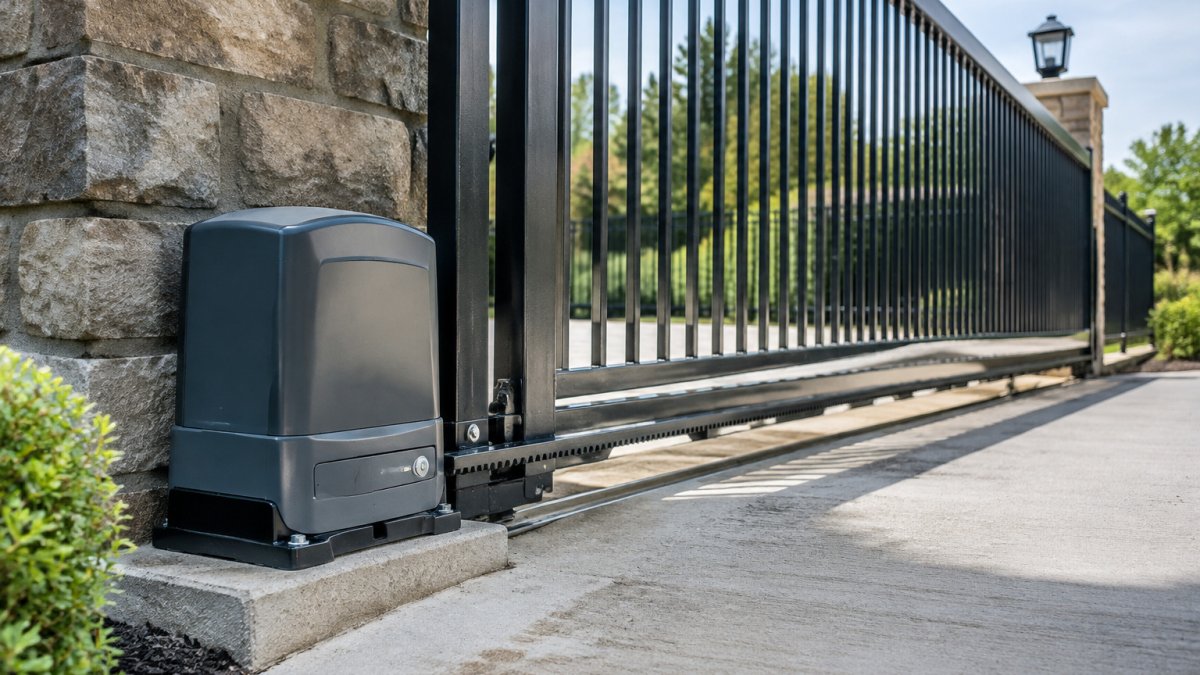
Swing operators push the gate through a wider arc, so the arm and hinge points see more use. Sliding operators handle weight more directly along the track, though they depend on a clean, level track to last.
Terrain plays a large role. A sloped driveway can make a swing gate awkward to balance, while a sliding gate needs a flat run. Your choice should follow the site first and the preference second.
Best Electric Gate Openers for Driveways
For most driveways, the best electric gate opener is the one that matches your gate's weight, length and expected cycles per day, not the one with the longest feature list. Compare the operators on rated gate capacity, duty cycle, motor type and whether they include a manual release for power outages.
Smart features such as smartphone access and wireless keypads are useful, but they should be secondary to mechanical ratings. A keypad is only convenient if the operator underneath can handle the traffic you give it.
Heavy Duty Swing Gate Opener Options
A heavy-duty swing gate opener is built for steel gates that are wide, tall or both. When a gate is heavy, the operator's motor horsepower and gear reduction matter more than the controller.
Look for operators that list a maximum gate weight at a specified gate length, since a heavy gate over a long span stresses the operator far more than a short one. Confirm the obstruction-detection and photo-eye safety sensor options, which protect people and vehicles during closing.
Installation alignment is critical. A well-built operator will still fail early if the gate hangs out of square or the posts are not solid. This is one reason custom steel work and operator selection should be planned together.
Matching Gate Weight, Length, and Duty Cycle to an Opener
Sizing an opener starts with measurement. Weigh the gate if you can, or estimate from the material and dimensions, then measure the gate length from hinge to latch. Multiply that by a safety margin, commonly chosen by the installer, so the operator is not running at its absolute limit.
Next, estimate daily use. Count how many times the gate opens on a typical day, including deliveries and visitors. Compare that number with the operator's cycles-per-day rating. If you regularly exceed the rating, step up to a heavier-duty model rather than hoping the motor holds.
Document these three figures (weight, length and cycles per day) before requesting quotes. Clear numbers make it far easier for any installer to recommend an operator that will last.
Durable Residential Gate Opener Cost and Lifetime Ownership
Pricing for gate openers depends on the operator type, gate weight, installation complexity, power source and accessories. For current pricing, request a site-specific quote from Bradshaw Gates through the website.
The more useful comparison is lifetime ownership. A lower-rated operator that needs replacement in a few years can cost more over time than a properly sized unit with a solid warranty. Factor in the expected service interval, the cost of replacement parts and how easily the operator can be repaired locally.
Ask your installer what the warranty covers, how long parts are stocked, and whether service calls are handled in your area. These answers often matter more than the initial purchase price.
Gate Opener Maintenance Schedule and Warranty Terms
Most gate openers need periodic checks rather than constant attention. A common practice is to inspect the hinges, arm connections, track and safety sensors at least twice a year, and to test the manual release and auto-reverse function at the same time.
Keep the gate balanced and the track clear of debris. Lubricate moving joints as the manufacturer directs, and listen for grinding or straining, which often signals a worn gear or a gate that has drifted out of alignment.
Read the warranty before you buy. Many manufacturers exclude damage from improper installation, power surges and weather-related corrosion, so the terms define what you are actually covered for. A warranty is only as useful as the service behind it.
Safety Sensors, Entrapment Protection, and Code Considerations
Safety is non-negotiable with any automatic gate. Entrapment protection, usually a photo-eye sensor and obstruction detection, stops or reverses a closing gate when something is in its path. These features should be tested monthly and after any repair.
Local building and electrical requirements vary, so confirm them with your local building department before installation. Local requirements for automatic gates may include specific sensor types, signage or emergency access provisions, so check with your local building department.
Treat any gate that fails to reverse as out of service until it is repaired. A gate that does not sense an obstruction is a serious hazard to children, pets and vehicles.
Climate, Terrain, and Power Backup Considerations
Climate and terrain shape operator performance more than most buyers expect. Heat speeds up wear on motors and electronics, while freezing temperatures can stiffen seals and slow the gate. Choose an operator with an appropriate weather rating for your region and confirm it can handle local conditions.
Sloped or uneven ground affects both the gate and the operator mounting. A stable concrete pad and proper alignment help prevent racking and early failure, which is where custom fabrication and careful installation pay off.
Plan for power loss. Battery backup kits keep the gate working during outages, and a manual release lets you open it by hand in an emergency. If your property depends on the gate for access or security, backup power is worth the added cost.
Getting a Gate Opener Quote From Bradshaw Gates
If you are weighing these options for your own property, the most reliable next step is a site visit. Bradshaw Gates can help you assess your gate's weight, length and daily use, and recommend an operator suited to your property.
Request a quote from Bradshaw Gates with your gate's dimensions, estimated weight and how often it opens each day. That information lets us match you to an operator built to last. Get a Quote
Frequently Asked Questions
How long should a residential gate opener last?
Most residential gate openers are designed for several years of regular use, and durability depends heavily on the duty cycle rating, the weight of the gate, and how often it cycles each day. Operators sized with headroom above the gate's actual weight and expected cycles usually wear more slowly. Routine maintenance such as lubricating hinges and checking the release mechanism also extends service life. Compare the warranty terms of each model, since coverage length is a useful indicator of the manufacturer's confidence in the build.
Homeowner inspecting a heavy steel swing gate and its operator arm to evaluate gate opener options.Is a swing or sliding gate opener better for a residential driveway?
Swing gate operators suit driveways with enough open space on the swing side and work well for double gates, while sliding operators fit sites where the gate must run along a fence line and no clearance is available for a swing arc. Sliding gates generally need a level track and a clear run, whereas swing gates depend on post strength and hinge alignment. Your driveway layout, slope, and available space should decide the choice more than any general preference.
What size gate opener do I need for a heavy gate?
Start with the gate's total weight and length, then choose an operator rated above those figures. Heavy gates place more torque on the motor, so a unit rated for a higher gate weight and a higher duty cycle will run cooler and last longer under daily use. Check the manufacturer's capacity chart, and confirm that the operator's rated gate length covers your gate. If the gate is near the upper limit of a model's rating, step up to the next size rather than running the motor at its maximum.
What maintenance does an automatic gate opener need?
Routine maintenance includes checking that the gate moves freely by hand when the manual release is engaged, lubricating hinges and moving joints, inspecting the safety sensors for obstruction and alignment, and clearing debris from the track or swing path. Test the auto-reverse function periodically to confirm the gate stops and reverses when it meets resistance. Tighten loose mounting hardware and inspect wiring and batteries at least once or twice a year. Bradshaw Gates offers comprehensive gate opener diagnostics and repair if you prefer a professional check.
Can a residential gate opener work during a power outage?
Many residential operators include a battery backup option that keeps the gate running for a limited number of cycles during an outage, while others rely on a manual release that lets you open the gate by hand. Solar-powered kits paired with battery storage are another option for sites without reliable power. Check the backup cycle count and battery replacement interval before buying, and confirm the manual release is easy to reach from both sides of the gate.
Which is better for a steep or uneven driveway, a swing or sliding gate operator?
Sliding gates generally handle slopes and uneven ground better, since the gate travels along a track rather than pivoting on posts that can shift with terrain. Swing gates on sloped sites need careful post setting, adequate hinge support, and an operator that can handle the changing angle of the gate arm. Site conditions such as soil stability and drainage matter as much as the operator type, so review them before deciding.
Add bradshawgates.com as a preferred source on Google →Frequently Asked Questions
How long should a residential gate opener last?
Most residential gate openers are designed for several years of regular use, and durability depends heavily on the duty cycle rating, the weight of the gate, and how often it cycles each day. Operators sized with headroom above the gate's actual weight and expected cycles usually wear more slowly. Routine maintenance such as lubricating hinges and checking the release mechanism also extends service life. Compare the warranty terms of each model, since coverage length is a useful indicator of the manufacturer's confidence in the build.
Is a swing or sliding gate opener better for a residential driveway?
Swing gate operators suit driveways with enough open space on the swing side and work well for double gates, while sliding operators fit sites where the gate must run along a fence line and no clearance is available for a swing arc. Sliding gates generally need a level track and a clear run, whereas swing gates depend on post strength and hinge alignment. Your driveway layout, slope, and available space should decide the choice more than any general preference.
What size gate opener do I need for a heavy gate?
Start with the gate's total weight and length, then choose an operator rated above those figures. Heavy gates place more torque on the motor, so a unit rated for a higher gate weight and a higher duty cycle will run cooler and last longer under daily use. Check the manufacturer's capacity chart, and confirm that the operator's rated gate length covers your gate. If the gate is near the upper limit of a model's rating, step up to the next size rather than running the motor at its maximum.
What maintenance does an automatic gate opener need?
Routine maintenance includes checking that the gate moves freely by hand when the manual release is engaged, lubricating hinges and moving joints, inspecting the safety sensors for obstruction and alignment, and clearing debris from the track or swing path. Test the auto-reverse function periodically to confirm the gate stops and reverses when it meets resistance. Tighten loose mounting hardware and inspect wiring and batteries at least once or twice a year. Bradshaw Gates offers comprehensive gate opener diagnostics and repair if you prefer a professional check.
Can a residential gate opener work during a power outage?
Many residential operators include a battery backup option that keeps the gate running for a limited number of cycles during an outage, while others rely on a manual release that lets you open the gate by hand. Solar-powered kits paired with battery storage are another option for sites without reliable power. Check the backup cycle count and battery replacement interval before buying, and confirm the manual release is easy to reach from both sides of the gate.
Which is better for a steep or uneven driveway, a swing or sliding gate operator?
Sliding gates generally handle slopes and uneven ground better, since the gate travels along a track rather than pivoting on posts that can shift with terrain. Swing gates on sloped sites need careful post setting, adequate hinge support, and an operator that can handle the changing angle of the gate arm. Site conditions such as soil stability and drainage matter as much as the operator type, so review them before deciding.
Planning a fence or gate project?
Bradshaw Gates serves Northeast Oklahoma and the Four-State area.
Request a Quote Call 918-325-0057