
Bradshaw Gates • Fence & Gate Advice
October 28How to Fix Leaning Fence Posts Before They Fall
Last Updated: October 28, 2026
Quick Summary
Fix leaning fence posts by first checking for rot, then bracing the fence and digging out the leaning side to reset the post to plumb. Backfill in 4- to 6-inch tamped layers and brace for at least 48 hours; replace the post if the wood is rotten.
- Call 811 at least two to three business days before digging and wait for the all-clear.
- Treat the area within about 18 to 24 inches of each locator mark as hand-dig-only.
- A 6-foot post should sit within roughly 3/4 inch of true plumb.
- Leave the 2x4 brace in place for at least 48 hours, longer if the ground is wet.
- Replace a post when rot reaches below the soil line or runs more than a few inches up.
Table of Contents
- Diagnose Why the Post Is Leaning Before You Dig
- Check for Rot and Post Damage
- Assess Soil, Drainage, and Ground Conditions
- Safety Checks and Tools You Need Before Digging
- 1. Call 811 before any digging
- 2. Confirm the marks and keep the tolerance zone clear
- 3. Stabilize the fence before you loosen anything
- 4. Check the post and hardware for stored energy
- 5. Lift and lever with your legs, not your back
- Tools to stage before you start
- How to Fix a Fence Post Without Replacing It
- Tools and materials for a no-replacement reset
- Step-by-step reset
- When to add concrete instead of soil
- Checkpoints before you call it done
- How to Straighten a Metal Fence Post Without Removing It
- How to Reinforce a Wood Fence and Replace a Rotten Fence Post
- When Repair Stops Working and You Need to Replace a Rotten Fence Post
- Get a Quote for Posts That Keep Leaning
- Frequently Asked Questions
Diagnose Why the Post Is Leaning Before You Dig
Leaning fence posts almost always point to one of three problems: rot at the base, loose or waterlogged soil, or a shallow footing pushed out of plumb by frost and heavy rain. Digging first can make the lean worse.
Check for Rot and Post Damage
Push a screwdriver into the wood near the soil line. If it sinks in easily or feels soft and crumbly, the post has rot.
Check the full height too. A post can rot at the top where a rail traps water. If the damage runs more than a few inches, repair will not hold, and you need a post replacement.
Assess Soil, Drainage, and Ground Conditions
Waterlogged soil, heavy rain runoff, and uneven ground all loosen a post footing over time. A post set in soft fill dirt moves far more than one set in packed clay.
Test the soil with a metal rod. If it slides in with almost no resistance, the ground is too loose to hold a post. Also check for low spots where water pools against the fence line.
| What You See | Likely Cause | Best Fix |
|---|---|---|
| Soft wood at the base | Rot | Replace the post |
| Firm wood, loose in the ground | Loose soil or shallow footing | Dig, reset, and add concrete |
| Lean after heavy rain | Waterlogged soil | Fix drainage, then reset |
| Post bent, wood intact | Impact or root pressure | Brace and straighten |
| Rust streaks on metal | Corroded anchor or footing | Reset or reinforce the anchor |
Safety Checks and Tools You Need Before Digging
Most guides tell you to call 811 and hand you a tool list. They skip what to do with the marks, how to stabilize the fence before you lever a post, and how to avoid the two most common injuries here, a strained back and a hand injury from a shovel hitting a buried line. Run these checks in order.
How to Fix Leaning Fence Posts
Proper DIY
1. Call 811 before any digging
Call 811 or submit a request online at least two to three business days before you dig. The free service dispatches locators who mark buried electric, gas, water, sewer, and communications lines. Wait for the marks and the all-clear before you put a shovel in the ground. Digging blind can hit an irrigation line, a gas line, or an electrical conduit, and a gas strike is a call-the-fire-department event, not a repair.
Watch Out If you uncover a line you did not expect, stop digging, do not lever against it, and call the utility that owns it. Do not backfill over an unmarked line and hope.2. Confirm the marks and keep the tolerance zone clear
Locator marks are approximate. Treat the area within about 18 to 24 inches of each mark as a hand-dig-only zone, no digging bar, no post-hole digger, no auger. Use a flat-blade shovel and work slowly, digging on the side away from the mark first.
3. Stabilize the fence before you loosen anything
A fence under rail tension can fall or kick when a post footing gives way. Clamp a 2x4 brace across two or three posts on the stable side, or drive stakes and tie the section off, before you dig. Never stand on the leaning side of a fence you have just loosened.
4. Check the post and hardware for stored energy
A bent metal post or sprung rail can release energy when you cut or unbolt it. Wear gloves and glasses, unload rails before you cut a post free, and cut a compressed rail in the middle rather than at the fastener.
5. Lift and lever with your legs, not your back
A 6-foot pressure-treated 4x4 weighs roughly 15 to 20 pounds, but a post set in concrete weighs far more once you add the footing. Use a digging bar or pipe as a lever and let the tool do the work. Keep your feet clear of the hole and never put your hand between the post and the hole wall.
Tools to stage before you start
- Shovel and a digging bar
- Level, at least 2 feet long (4 feet is better for plumb)
- 2x4 brace boards and clamps
How to Fix a Fence Post Without Replacing It
You can fix a fence post without replacing it when the wood is solid and only the footing has failed. Dig around the post, loosen the soil, straighten it to plumb, then pack and brace it.
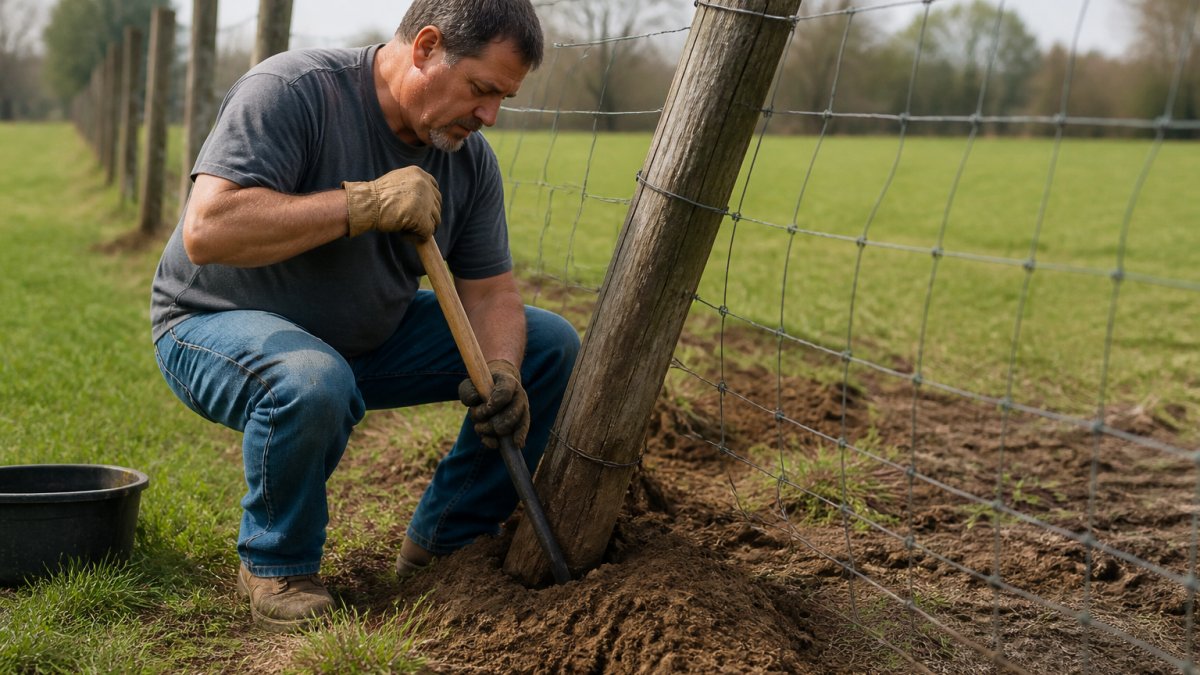
A homeowner using a shovel and 2x4 brace to repair leaning fence posts in a sunny backyardTools and materials for a no-replacement reset
- Shovel and a digging bar (a 60-inch bar gives enough leverage on packed soil)
- A 2-foot or 4-foot spirit level; a 4-foot level reads plumb more accurately on a post
- Two 2x4 brace boards, at least 8 feet long, and wood clamps or C-clamps
Step-by-step reset
- Brace the fence first. Clamp a 2x4 across two or three posts on the stable side so the section cannot fall once you loosen the footing. A fence under rail tension can kick sideways the moment the soil gives way.
- Dig on the leaning side. Excavate a crescent around the post, roughly 12 to 18 inches deep and wide enough to fit your shovel, exposing the footing on the side the post leans toward. Do not dig all the way around unless the post is loose in every direction.
- Loosen the soil with a digging bar. Work the bar around the post to break the soil bond. If you hit concrete, stop and assess, a cracked concrete collar usually means the footing itself failed and the post needs a full reset (see the replacement section below).
- Straighten to plumb. Push the post upright and check it with the level on two adjacent faces, not just one, a post can read plumb front-to-back and still lean side-to-side. Aim for within about 1/8 inch per foot of post height; a 6-foot post should sit within roughly ¾ inch of true plumb.
- Backfill in layers. Add gravel and soil in 4- to 6-inch layers and tamp each with the end of a 2x4 or a hand tamper before adding the next. Tamping locks the post; dumping the whole hole at once leaves voids that let it drift again.
- Brace until settled. Leave the 2x4 brace in place for at least 48 hours, and longer if the ground is wet. Recheck plumb before you remove it.
When to add concrete instead of soil
If the original footing was shallow, or the hole is wider than about 8 inches around the post, rebuild the footing with concrete. Set the post, pour concrete mixed to the bag directions, slope the top away from the post so water sheds, and let it cure fully, typically 24 to 48 hours before the fence carries load, longer in cold weather. Do not reattach rails or hang a gate until it has set.
Get a Quote →
Checkpoints before you call it done
- Level reads plumb on two faces
- Post does not move when you push it hard at rail height
- Backfill is tamped and slightly mounded so water runs off
If any checkpoint fails, stop and move to the replacement method rather than repeating the same reset.
How to Straighten a Metal Fence Post Without Removing It
Metal posts bend and lean when the footing shifts, not because the steel fails.
Use a pipe wrench or a length of pipe as a lever and work slowly, because steel can kink if you force it.
For post anchors and ground spikes, check the hardware first. A bent anchor plate or a loose bolt is often the whole problem, and tightening or replacing it takes minutes.
How to Reinforce a Wood Fence and Replace a Rotten Fence Post
To reinforce a wood fence, brace the posts, add a wood stake or post anchor at the base, and reattach loose rails with galvanized fasteners. If the wood has rotted through, reinforcement will not save it.
When Repair Stops Working and You Need to Replace a Rotten Fence Post
Replace a rotten fence post when the rot reaches below the soil line or runs more than a few inches up the post. Signs it is time:
- The post crumbles when you probe it
- The base is hollow or soft all the way around
- The post moves even after resetting
To replace it, brace the fence section, cut the old post free, dig out the footing, and set a new pressure-treated post in gravel and concrete. Set the depth to at least one-third of its above-ground height, backfill in tamped layers, and check plumb before the concrete sets.
A common mistake is rushing the cure. Concrete needs time to harden before the fence carries any load.
Get a Quote for Posts That Keep Leaning
Some posts keep leaning no matter how many times you reset them. That usually means the soil, drainage, or original footing was wrong from day one, and no amount of digging fixes a bad foundation.
We set solid posts with careful alignment, use piece-by-piece quality control, and handle difficult terrain and unusual jobs. If a gate is involved, we also diagnose and repair gate openers.
Get a quote from Bradshaw Gates.
Frequently Asked Questions
How can you tell whether a leaning fence post needs to be replaced?
Push hard against the post. If it moves at the base and the wood feels soft or crumbles when you probe it with a screwdriver, the post has rot below grade and replacement is the durable fix. A post that is solid but tilted, with cracked soil on one side, usually just lost its footing and can be straightened. Check the post depth too: posts set less than a third of their length in the ground tend to work loose.
Can you straighten leaning fence posts without taking down the fence?
Yes in most cases. Dig around the base to loosen the soil, brace the fence section so it does not shift, then pull or push the post back to plumb and pack the hole with compacted soil or fresh concrete. This works best on posts with solid wood and a footing that has not heaved. If several posts in a run are leaning the same way, the whole section may need resetting rather than one post.
How do you fix a fence post that is leaning in loose or wet soil?
Loose or waterlogged soil is the most common cause of a leaning fence post. Dig out the hole wider than the original footing, let it drain, then reset the post with a base of compacted gravel and concrete rather than soil alone. Concrete set below the frost line holds the post against heaving. If the ground stays wet, add drainage or switch to a deeper footing, since the same spot will loosen again.
Do post buddies or ground spikes actually work on a leaning post?
Post anchors and ground spikes can stabilize a post in soft ground, but they do not fix rot or a footing that has failed. They work best as reinforcement on a sound post in loose soil, driven alongside the post and bolted to it. On a post that is already leaning because the base rotted, an anchor just holds a failing post upright for a season or two before it goes again.
Get a Quote Add bradshawgates.com as a preferred source on Google →Frequently Asked Questions
How can you tell whether a leaning fence post needs to be replaced?
Push hard against the post. If it moves at the base and the wood feels soft or crumbles when you probe it with a screwdriver, the post has rot below grade and replacement is the durable fix. A post that is solid but tilted, with cracked soil on one side, usually just lost its footing and can be straightened. Check the post depth too: posts set less than a third of their length in the ground tend to work loose.
Can you straighten leaning fence posts without taking down the fence?
Yes in most cases. Dig around the base to loosen the soil, brace the fence section so it does not shift, then pull or push the post back to plumb and pack the hole with compacted soil or fresh concrete. This works best on posts with solid wood and a footing that has not heaved. If several posts in a run are leaning the same way, the whole section may need resetting rather than one post.
How do you fix a fence post that is leaning in loose or wet soil?
Loose or waterlogged soil is the most common cause of a leaning fence post. Dig out the hole wider than the original footing, let it drain, then reset the post with a base of compacted gravel and concrete rather than soil alone. Concrete set below the frost line holds the post against heaving. If the ground stays wet, add drainage or switch to a deeper footing, since the same spot will loosen again.
Do post buddies or ground spikes actually work on a leaning post?
Post anchors and ground spikes can stabilize a post in soft ground, but they do not fix rot or a footing that has failed. They work best as reinforcement on a sound post in loose soil, driven alongside the post and bolted to it. On a post that is already leaning because the base rotted, an anchor just holds a failing post upright for a season or two before it goes again.
Planning a fence or gate project?
Bradshaw Gates serves Northeast Oklahoma and the Four-State area.
Request a Quote Call 918-325-0057